
Large 12 tray platter American Brilliant Period Cut Glass Crystal Anne / Laurel
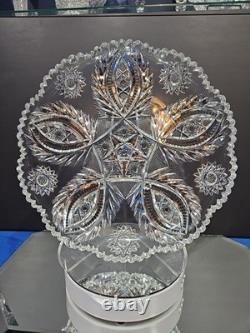
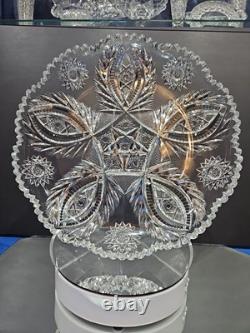
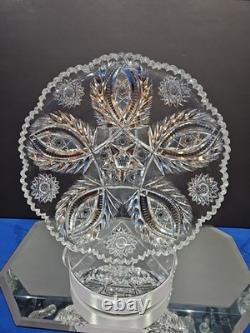
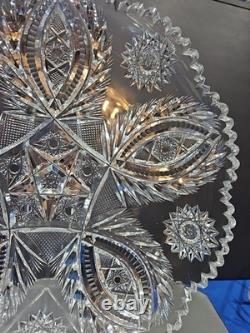
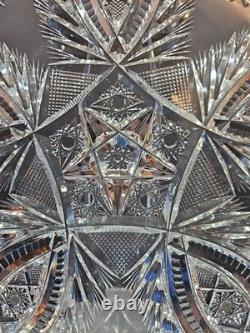
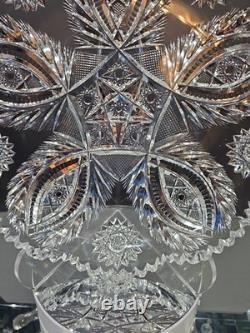
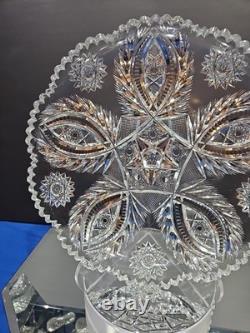
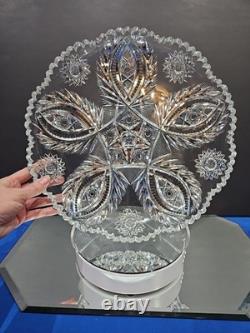
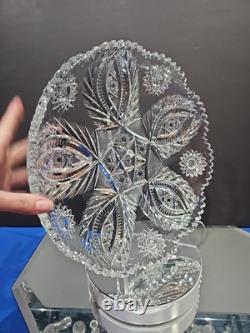
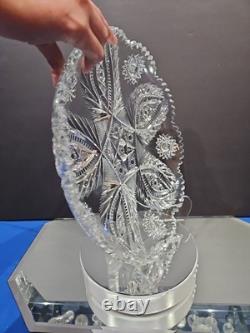
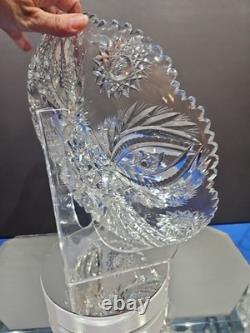
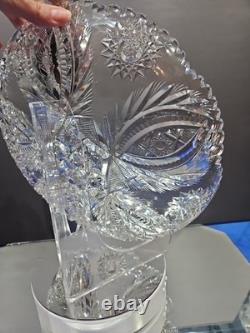
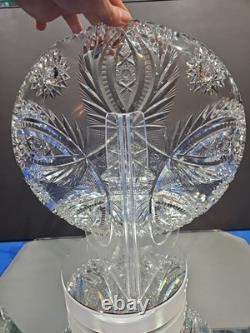
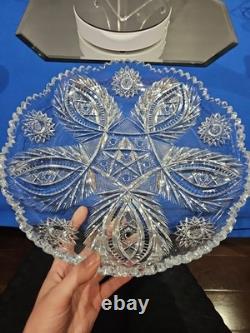
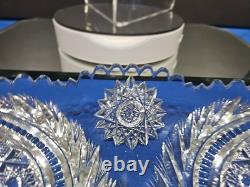
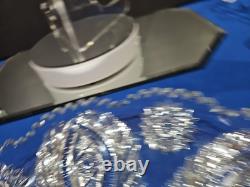
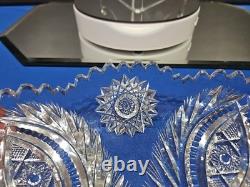
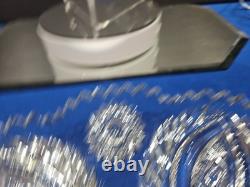
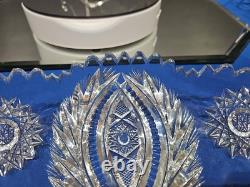
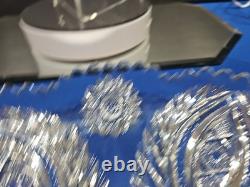
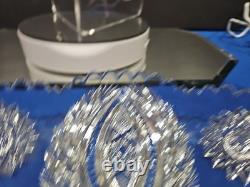

This is a Round "Ice Cream Tray" These Ice cream trays were made large and flat in center for the block of Ice cream, with higher sides like a shallow bowl to catch the melt. Today "Ice cream trays" are often the focal points for advanced collectors who display them upright in sturdy easels. The pinnacle of many collections. Measures: 12 wide top rim.. This is from the American Brilliant period (1870 to 1920's).
This design is one from what we call the "Anne" and "Laurel" family of designs. Several cutting houses cut their own version of this pattern- often with just minor differences in the minor details.
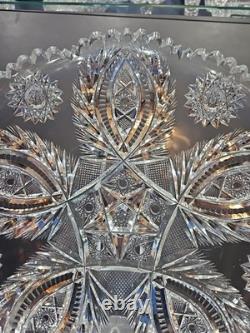
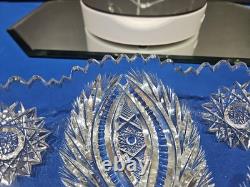
The grid always shows with the same center grid (often with the 5 point star and Hobstars cluster motif like this) and that is surrounded with the large wreath or Laurel design with vessica's inside the flashing constaining 1 or multiple Hobstars, then the suspended Hobstars around the edge to finish the main gallery. However within the minor details inside the center grid & inside the vessica's often change, in this case the little hob buttons inside those Hobstars are all left clear and some companies chose to cut little stars in those.
With this design there is only 1 small Hobstars inside the flashed vessica's and some companies used 2 or 3, while others used 1 like this one. This one is cut most similar to "Anne" by W C Anderson, "Laurel" by Parsche, and "Elsie" by Fry.
Another thing about this tray to mention is that it is cut on an imported blank possibly, because it does not fluoresce bright green from manganese- contrary to myths circulated by New collectors or AI there are many pieces of true American brilliant that do not fluoresce- many good companies including Hawkes & Egginton imported Blanks from Europe and cut their designs on them here, and later in the era some American Blanks did not fluoresce as well (some Libbey blanks come to mind that didn't fluoresce and some even fluoresce a pinkish hue because they used other formulas that didn't use manganese). Basically this is either a later blank in the second half of the era or an imported blank for this reason- it is not a later reproduced piece from the 1980's as those are only specific rare patterns that were cut by 1 scrupulous dealer for the intention of deceiving buyers into paying thousands of dollars for repro pieces. This is not one they faked and they had no reason too so you don't have to consider that. I have had this displayed in my collection on an easel for years. Get a 9" to 12" tall clear acrylic easel and display it upright and it will be a focal point in your collection as well.
Condition: It is over 100 years old and good for its age. It has some of the typical minor condition flaws from age that today are typical patina. Large trays of ten have micro nips and dings around the teeth- this one has the regular minor wear but no chipped off teeth or anything considered noticeable. It also has the regular scratch wear you find front and back from age, but not overly scratch or heavily worn. It displays fabulously in a large easel. I always go around the rim and point to anything you can see- look at all 24 pictures. This is for 2 reasons- We sell antiques / vintage goods, therefore they are used, I provide photos of the exact items and not stock pictures so you can always see the exact item you will get.